
Every few years, marketing declares something dead. Email. SEO. Organic reach. And now… the keyword.
The argument sounds convincing. Google changed. Match types blurred. Automation took over. Audiences, not words, became the star of the dashboard.
And yet—something feels off.
Because despite all the changes, people still wake up, grab their phones, and ask questions. They type. They speak. They search.
And that moment—that exact moment—is where the keyword still quietly wins.
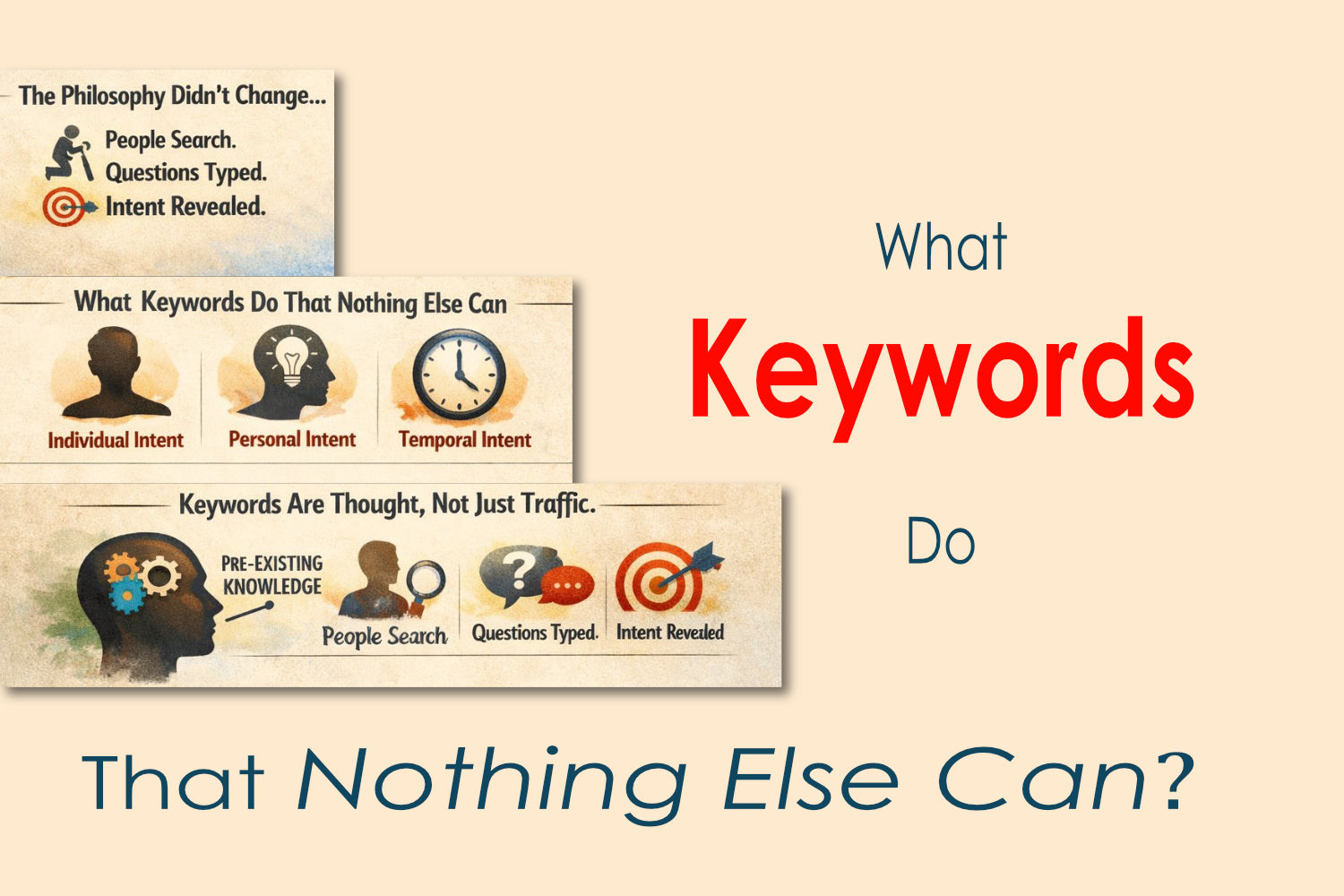
What Keywords Do That Nothing Else Can
Audience targeting tells you who someone might be.
Demographic targeting tells you what group they belong to.
Keywords tell you something far more dangerous (and valuable):
- what one person is thinking
- right now
- in their own words
A keyword is not a data point.
It’s a sentence fragment from someone’s mind.
When someone types “yoga classes near me”, they are not browsing.
They are communicating.
This is individual intent.
This is personal intent.
This is temporal intent.
And no interest bucket or lookalike audience can touch that.
Timing Is Everything—and Keywords Own Timing
Marketing loves timing as a concept. Keywords are timing in practice.
When is someone interested in learning about your yoga studio?
Not last week.
Not after they watched three inspirational reels.
Now.
At the exact second they searched. Keyword targeting doesn’t interrupt interest. It responds to it.
That’s why the intent is inseparable from the timing. You don’t predict demand—you meet it.
Keywords Are Thought, Not Just Traffic
Here’s the part most dashboards miss: A keyword requires effort. Paid search forces a person to translate a thought into language. That means pre-existing awareness.
A problem already acknowledged. A solution already being considered. This is why keywords are powerful—and limited.
They won’t create demand from nothing. They capture demand that already exists. And that’s not a weakness. That’s clarity.
Yes, Google Changed. The Philosophy Didn’t.
Google absolutely changed how we bid, match, and optimize. But it didn’t change why search exists. As long as humans search, as long as questions are typed or spoken,
as long as curiosity turns into language— keywords will matter.
Maybe not the way they did in 2012. Maybe not with the same level of control. But philosophically? Strategically? Psychologically? They’re still the purest signal in marketing.
So No—Don’t Give Up
The keyword isn’t dead. It’s just no longer a mechanical trick.
It’s a window into intent.
A moment of honesty.
A raised hand in a noisy digital room.
And for marketers who know how to listen— that’s still everything.
