
When we published our 2024 article about Programmatic Platforms vs. Google Ads, the question was simple: Which one should your business use?
But 2025 changed the game. AI is now everywhere. Search behaviour evolved. Privacy tightened. And the real question became:
How do Google Ads and Programmatic work together — not against each other — in the age of automation?
Let’s simplify what truly matters for your marketing strategy in 2025.
Google Ads in 2025 — AI Is Powerful, But People Still Matter
Google Ads today is powered by deeper automation. Tools like Performance Max can run across Search, YouTube, Maps, and Discovery from one dashboard — but that doesn’t mean marketers are out of the equation.
AI can optimise, but it cannot imagine.
It can adjust bids, rotate creatives, and find audiences faster than any human — but it still depends entirely on the strategy, creativity, and context we feed it.
Marketers decide what the campaign is about, who it should reach, and why it matters.
AI just helps execute that vision with scale and precision.
So in 2025, the smartest marketers aren’t fighting automation — they’re training it.
Programmatic in 2025 — Smarter, Broader, and More Contextual
Programmatic platforms have evolved far beyond display banners. They now power video, audio, Connected TV (CTV), digital out-of-home, and even in-game placements.
With third-party cookies fading, the industry is shifting toward:
- Contextual AI — matching ads to content rather than tracking users.
- Dynamic Creative Optimization (DCO) — automatically personalising ads in real time.
- Private Marketplaces (PMPs) — premium, transparent inventory for trusted brands.
Programmatic is no longer just for scale — it’s for storytelling across channels.
Privacy & Data Ownership Define the Winners
2025 is the year of the first-party marketer.
As cookies disappear, both Google Ads and programmatic platforms rely on data you own — not what you borrow.
- Google uses its massive first-party ecosystem (Search, YouTube, Gmail, Maps).
- Programmatic platforms use clean rooms, contextual signals, and identity solutions to stay compliant.
If your brand isn’t collecting its own data, you’re renting your future — and paying rent every month.
Creative Automation — The New Currency of Attention
Automation made creativity more important, not less.
- In Google Ads, your campaign performance depends on feeding the algorithm enough images, videos, and text assets to learn what works.
- In Programmatic, DCO can serve thousands of creative combinations in seconds — but only if you supply quality content.
One static ad in 2025 is the equivalent of showing up to a Formula 1 race on a bicycle.
Measuring Success Is Harder — and That’s a Good Thing
Attribution is finally growing up. “Last click” is obsolete. 2025 is about incrementality, data-driven attribution, and cross-channel insights.
- Google Ads offers AI-based modelling inside its ecosystem.
- Programmatic platforms measure lift and multi-touch paths across devices.
Which One Fits Your Business?
| Business Type | Best Fit | Why |
| Local or Small Business | Google Ads | Intent-driven leads, faster setup, lower entry cost. |
| E-Commerce or Mid-Size Brand | Hybrid (Google + Programmatic) | Combines conversion + brand visibility. |
| Large or Regional Brand | Programmatic + Google Integration | Omnichannel scale, video/CTV reach, deep data. |
It’s not Google vs. Programmatic anymore — it’s Google and Programmatic, working in sync.
The most effective marketers utilize both: one for precision, and one for expansion.
What’s Next Beyond 2025
- Search is becoming conversational and multimodal — AI assistants, voice, image, and text merged.
- Programmatic is expanding into immersive formats (AR, VR, in-game).
- Privacy will shape how campaigns are measured, not how they’re created.
- Generative-AI will soon produce adaptive video and copy in real time — guided by human strategy.
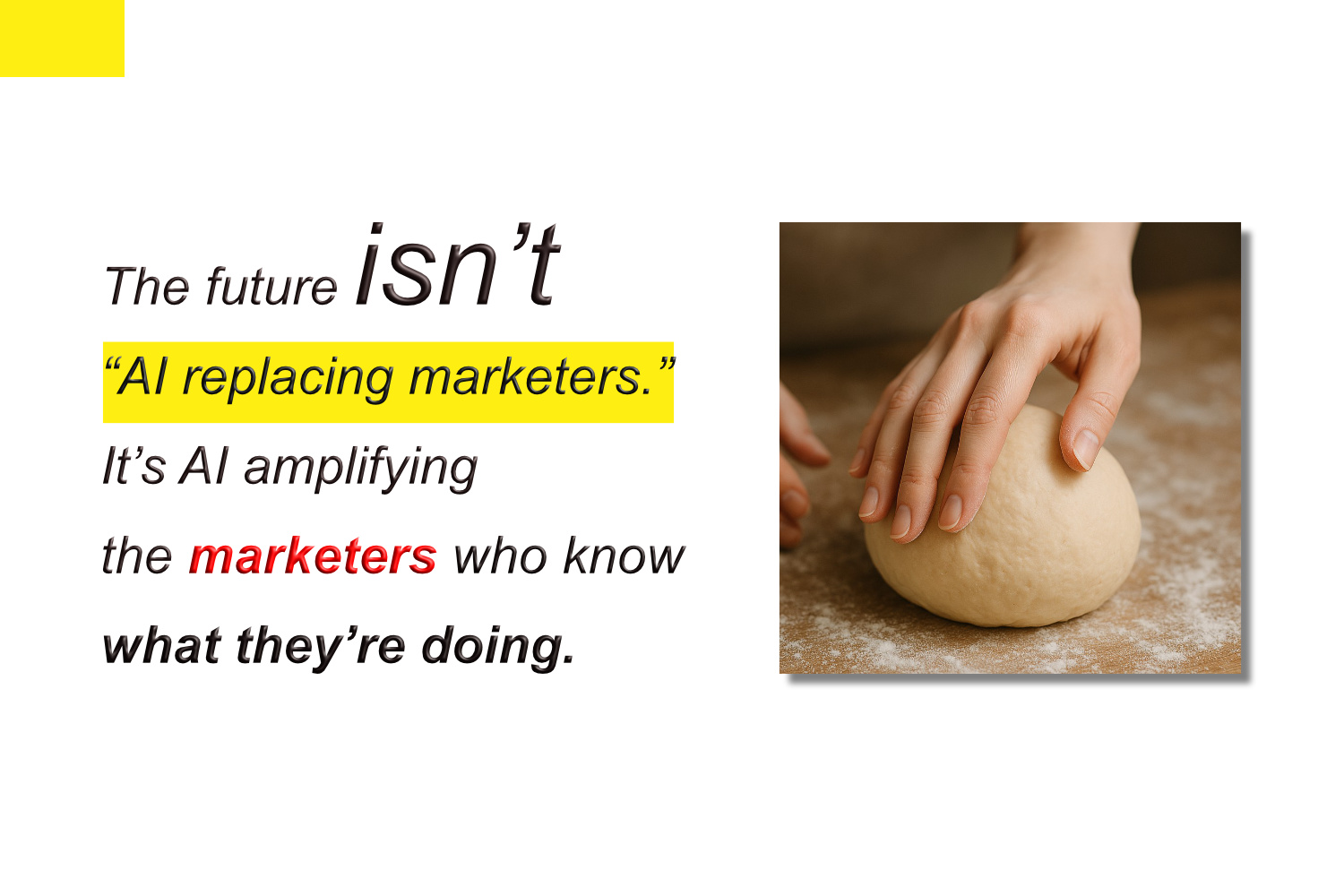
The future isn’t “AI replacing marketers.” It’s AI amplifying the marketers who know what they’re doing.
Final Thought
Whether you’re running a Google campaign or investing in programmatic media, the question isn’t which tool is better — it’s who’s driving the tool.
AI can automate results, but only humans can define meaning.
And meaning, in marketing, is what converts.
References & Further Reading
- Search Engine Land – Google Ads’ 2025 AI Push
- eMarketer – Programmatic Advertising Forecast 2025
- WordStream – Google Ads Trends 2025
- Fluency Inc – Programmatic Execution at Scale
