
The Cautionary Tale of New Coke
In 1985, Coca-Cola made what it thought was a brilliant move. After years of losing ground to Pepsi, the company decided to launch “New Coke” — a sweeter version of its flagship drink. On paper, it made sense: blind taste tests showed people preferred it to both classic Coke and Pepsi. Billions were invested, ads rolled out, and shelves were stocked.
But what happened next has since become a cautionary tale in business schools everywhere. Consumers revolted. Phone lines at Coca-Cola headquarters rang nonstop, angry letters piled up, and protests even broke out. Within just 79 days, New Coke was pulled off the shelves, and Coca-Cola quietly returned to its original formula.
The lesson? Coca-Cola had done “research” — but the wrong kind. They asked about taste, but ignored the emotional bond people had with the brand. What looked like a small tweak in a lab test turned out to be a seismic miscalculation in the market.
Why Research Must Come Before Prototypes and Campaigns
Every product begins as an idea, and every idea feels exciting to its creator. But excitement isn’t a strategy. Before any prototype is built or campaign is launched, the most important step is deceptively simple: understanding the market.
Research isn’t a box to tick. It is the foundation that determines whether an idea becomes a story of success — or another case study in failure. Skipping is like building a house without checking if the ground can hold its weight.
Market Research as the Map Before the Journey
Think of market research as a map. You wouldn’t set off on a road trip without knowing if the highway is open or if there’s even a bridge to cross the river. In the same way, designing and prototyping a product without research is an adventure built on hope rather than knowledge.
Market insight gives you coordinates: Who are your customers? What problem do they care about most? What alternatives already exist? With that clarity, a prototype is not just a sketch of an idea — it’s a response to a real need.
The Numbers Don’t Lie: Why Most Products Fail
Studies suggest that nearly 80% of new products fail within their first year. The reasons vary — poor timing, weak marketing, flawed design — but when you peel back the layers, many of these failures share a common root: a lack of market understanding.
By contrast, companies that invest heavily in research reduce their failure risk dramatically. For example, design consultancy IDEO famously spends the bulk of its time not on sketching solutions, but on observing customers — how they shop, how they interact with objects, what frustrates them. The prototypes that emerge are sharper, more relevant, and often more successful because they begin with reality, not imagination.
From Customer Insight to Prototype Features
Here’s where marketing and design truly meet.
- Customer pain points uncovered in surveys → become features in the prototype.
- Market size estimates → guide how much to invest in design complexity.
- Cultural preferences → shape form, color, and usability choices.
For example, a product meant for GCC markets might prioritize durability in hot climates or reflect local aesthetics in design. That’s not just a design decision — it’s a marketing insight translated into form.
A Water Bottle That Redefined Its Purpose
Take the simple example of a household water bottle. Without research, a designer might focus on aesthetics: sleek curves, glossy finishes, elegant caps. But research might reveal something more practical — in hot regions, condensation is a bigger problem than appearance. Customers don’t want a stylish bottle that drips on their desk; they want one with insulation that works.
The insight shifts the prototype entirely. The bottle is still attractive, but the focus becomes function driven by customer reality. Design is no longer decoration; it’s a response.
Are Product Failures Really Research Failures?
So here’s the deeper question: How many failed products weren’t actually design failures — but research failures in disguise?
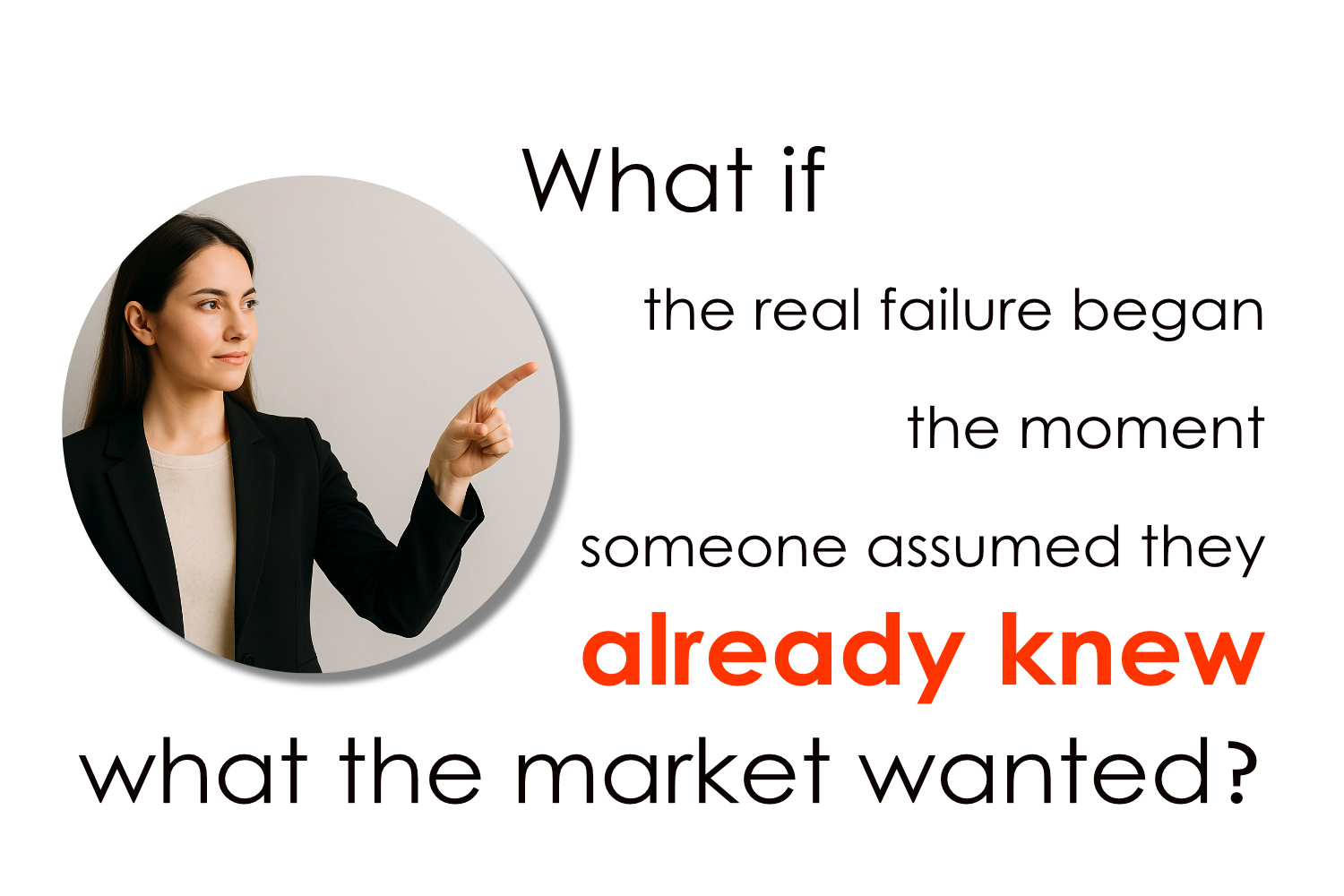
We often blame poor design or weak marketing campaigns when products flop. But what if the real culprit is earlier? What if the failure began the moment someone assumed they already knew what the market wanted?
Takeaway
Market research is not glamorous. It doesn’t produce beautiful prototypes or flashy campaigns. But it is the quiet work that decides whether those later stages will matter at all.
Every successful product launch rests on the same truth: research first, everything else second. It’s the bridge between imagination and reality — the step that turns a hopeful idea into a confident strategy.
And once the insights are clear, only then does prototyping take its rightful place as the tool to reduce risk and bring the idea to life.
Next Step in the Journey
Understanding your market is only the beginning. Once you’ve uncovered the insights that matter, the next challenge is turning them into something tangible. That’s where prototyping comes in — the tool that transforms research into reality.
In the next article, we’ll explore how prototyping reduces risk in go-to-market strategies and why it’s the natural second step after research.
Sources & Further Reading
- The Coca-Cola Company Archives – The Story of New Coke (official company history).
- TIME Magazine (July 1985) – Coke’s Biggest Mistake.
- The New York Times (July 11, 1985) – Coca-Cola Bringing Back Old Formula.
- Harvard Business Review – Case studies on market research failures and product launch strategies.
- Ries, A., & Trout, J. (1994). The 22 Immutable Laws of Marketing. (Discusses New Coke as a classic lesson).

3 comments
Thanks Talal
wish you the best
Thank you!
Comments are closed.