
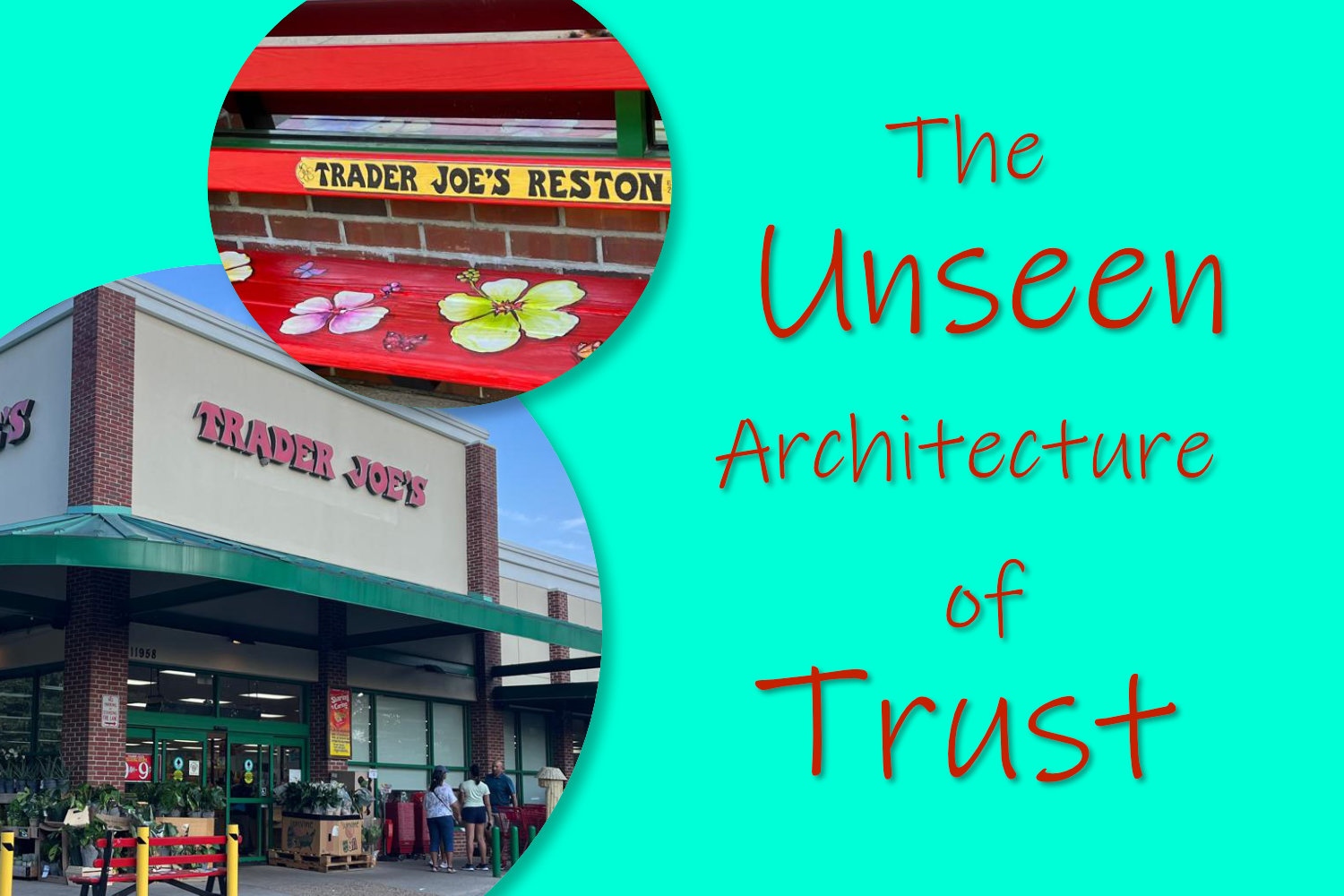
What if the key to winning customer loyalty wasn’t in shouting louder, discounting more, or chasing every trend… but in quiet, consistent acts of trust and kindness?
Somewhere in suburban America, it’s raining — the kind of rain that makes people sprint, soaked and shivering, from a grocery store to their cars. But here, something unexpected happens. A man or a woman in a Hawaiian shirt steps out of the store holding a giant umbrella. They’re not selling anything. They’re not asking for tips. They’re just walking a stranger to their car.
This isn’t an ad. It’s not part of a loyalty program. It’s not even a viral marketing stunt.
It’s just… Trader Joe’s is being Trader Joe’s.
And in a business world obsessed with performance metrics, conversion funnels, and digital domination, that quiet walk in the rain tells us everything we need to know about what real loyalty looks like — and how small businesses, no matter how limited their resources, can build something unforgettable.
The Store That Doesn’t Follow the Rules
Let’s imagine for a moment that you’ve never heard of Trader Joe’s.
- No ads.
- No influencers.
- No online delivery.
- No flash sales.
- No discount coupons.
And yet, people adore it. Not just in a “this store is fine” way — but in the kind of way people love their local coffee shop or a childhood friend.
So how does this business — which, on paper, breaks almost every “modern” rule of retail — inspire that kind of loyalty?
Let’s break down what Trader Joe’s doesn’t do:
- It doesn’t rent out shelf space to third-party brands.
- It doesn’t run endless promotions or train shoppers to wait for discounts.
- It doesn’t bombard the world with marketing messages.
And yet, it has become one of the most beloved grocery chains in the U.S.
The Unseen Architecture of Trust
What fills the space where ads and coupons used to be?
Trust.
Walk into any Trader Joe’s and you’ll notice a few things right away:
- Prices are fair. Not “cheap,” but fair — and they stay that way. No psychological tricks, no fluctuating prices based on data, no loyalty card games.
- Employees smile — not the “I’ve been trained to smile” kind, but the “I actually like being here” kind.
- When it rains, someone literally walks customers to their car with an umbrella.
But perhaps most fascinating of all? The shopping carts.
In most parking lots, carts are scattered like fallen dominoes, blocking spaces and rolling into cars. But at Trader Joe’s? Almost everyone — we’re talking over 99% — returns the cart to its proper place.
That’s not a statistic. That’s a signal.
When people feel trusted, when they feel respected, when they sense that a business values them beyond the transaction — they respond in kind.
They return the cart.
What Small Businesses Can Learn (and Do Today)
You don’t have to be a grocery store to act like Trader Joe’s.
In fact, if you’re a small business owner — with a limited budget, no ad agency, no SEO department — the Trader Joe’s paradox is your secret weapon:
Do less. But mean it.
Here’s what that looks like:
- Don’t chase the coupon crowd. Instead, build honest pricing that people can rely on without second-guessing.
- Don’t outsource the soul of your brand. Own your customer experience, down to the smile on your team’s face.
- Don’t be everywhere. Be unforgettable somewhere.
Trader Joe’s didn’t earn trust by adding complexity. It earned trust by doing simple things really, really well.
- Not loudly.
- Not digitally.
- Not transactionally.
But humanly.
The Power of Invisible Marketing
Think about your last favorite brand interaction. Not the one that made you click — the one that made you feel something.
It was probably invisible to everyone else. Maybe a kind reply to an email. A handwritten thank-you note. A moment of empathy when you had a problem.
That’s the kind of marketing small businesses can win at — not the stuff that fills Instagram feeds, but the things that fill hearts.
That’s what Trader Joe’s teaches us.
And it’s not about selling groceries.
It’s about building a business that people miss when they move away. A business that feels like home. A business that makes people return the cart — even when no one’s watching.
Final Thought: A Rainy Day Invitation
Next time it rains, walk your customer to the car — metaphorically or literally.
Be the brand that doesn’t need to scream, because your values whisper just loud enough.
And if you build that kind of business?
You won’t need coupons.
You won’t need ads.
You’ll have something far more powerful: trust that walks with your customers, rain or shine.
